

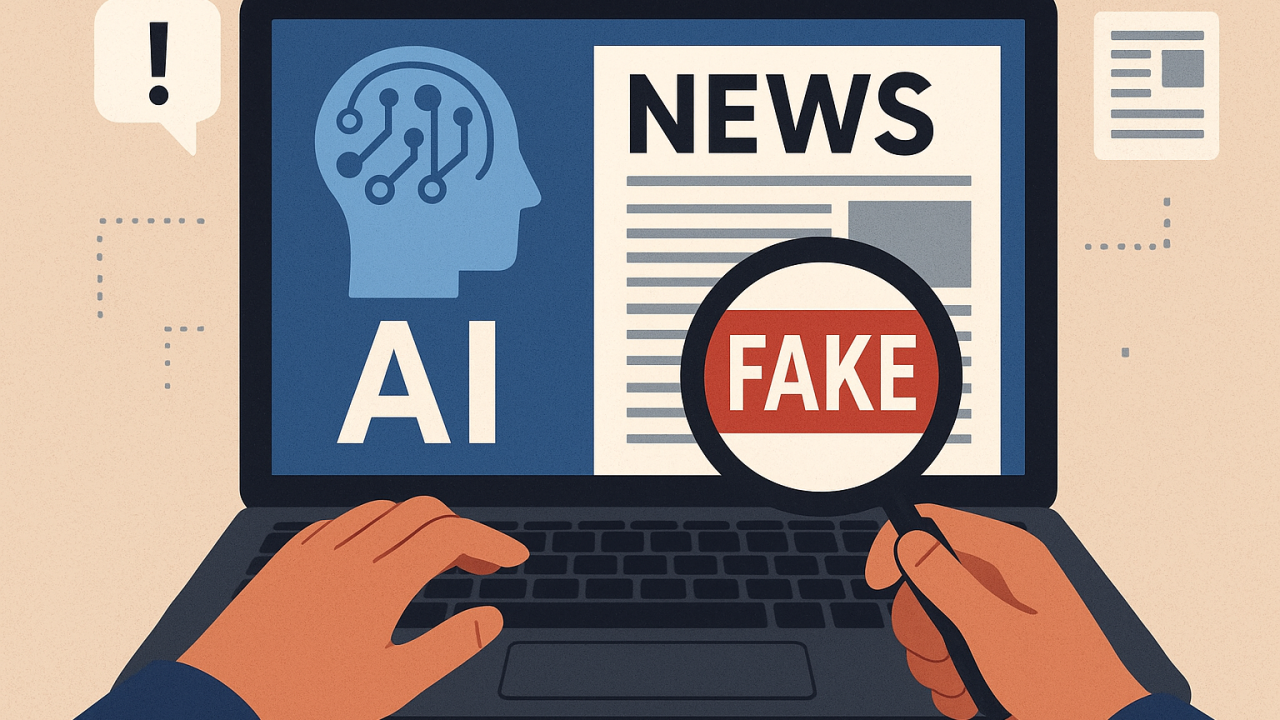
The internet has transformed how people discover news, understand public events, and communicate with others. Information that once took hours or days to reach a large audience can now spread across social media platforms, messaging applications, video-sharing services, and online communities within minutes. This rapid exchange has made news more accessible, but it has also created opportunities for misinformation to circulate widely. Misleading headlines, manipulated photographs, fabricated stories, and outdated information presented as current events can influence public opinion before readers have an opportunity to examine the facts.
Online misinformation is not a single problem with one simple solution. It includes inaccurate information shared unintentionally, deliberately fabricated claims designed to deceive audiences, and genuine material presented without the context needed to understand it correctly. Modern digital communication makes these problems more complicated because users frequently encounter information through short posts, screenshots, forwarded messages, and video clips rather than complete reports. Understanding these patterns is essential for anyone who wants to make informed decisions in an increasingly connected world.
A news-focused analytical approach, such as the perspective associated with newsgiga com, can help readers think more carefully about digital information, emerging media habits, and the importance of responsible reporting. By examining how misleading claims develop, how online audiences respond, and how verification practices can reduce confusion, readers can become more confident in distinguishing credible reporting from unsupported statements.
Understanding the Changing Landscape of Online Misinformation
Online misinformation has evolved alongside the technologies people use to communicate. Earlier forms often relied on inaccurate emails, misleading websites, or manipulated headlines. Today, the same basic problem can involve sophisticated video editing, AI-generated images, automated accounts, fabricated quotations, and convincing copies of legitimate news formats. These techniques can make unreliable information appear professional and trustworthy, particularly when a post is shared by someone the reader already knows.
Another important change is the speed at which misleading content can move between different digital spaces. A claim may begin in a small online community, appear in a screenshot on a social platform, spread through private messaging groups, and eventually become the subject of a broader public discussion. During this process, the original source may disappear from view, while repeated sharing creates the impression that many independent sources have confirmed the same claim. In reality, numerous posts may all originate from one unverified statement.
The analysis of these developments requires attention to both content and distribution. Readers need to ask whether a claim is supported by evidence, but they should also consider where it originated, who is sharing it, and whether the available information has changed since publication. This broader perspective helps explain why misinformation can remain influential even after corrections become available.
Major Online Misinformation Trends in the Current Digital Environment
The Growing Influence of Artificial Intelligence
Artificial intelligence has made it easier to produce realistic-looking text, photographs, audio recordings, and videos. These tools can support legitimate journalism, education, and creative work, but they can also be misused to create fabricated evidence or imitate real people. A synthetic recording may appear to show a public figure making a statement that was never made, while an AI-generated image may be circulated as proof of an event that did not occur.
The difficulty is not limited to detecting whether an image or recording was generated by AI. Authentic material can also be edited, cropped, or combined with misleading captions. Furthermore, some AI-generated content contains obvious errors, while other material may look convincing at first glance. Readers should therefore avoid relying entirely on visual appearance or automated detection tools. Checking the original source, comparing independent reports, examining the date and location, and seeking direct statements from relevant organizations provide a stronger basis for judgment.
Misleading Headlines and Out-of-Context Content
Sensational headlines remain an important feature of online misinformation because many people make quick decisions about what to read or share. A headline may exaggerate a minor development, imply a conclusion that the article does not support, or omit an important qualification. In some cases, the article itself contains accurate information, but the headline encourages readers to draw an incorrect conclusion.
Context is equally important when authentic photographs, videos, or statements are reused to support unrelated claims. An old photograph from one country may be presented as a current event elsewhere, or a short video clip may exclude the explanation that changes its meaning. These examples demonstrate why verifying individual details matters. Readers should examine the full report, check publication dates, and compare captions with the original material before accepting an online claim as reliable.
The Role of Algorithms and Viral Sharing
Digital platforms use recommendation systems and other ranking mechanisms to determine which posts appear prominently in users’ feeds. These systems can help people discover relevant information, but they may also increase the visibility of emotionally engaging material. Content that provokes fear, anger, surprise, or excitement can attract rapid reactions, making it more likely to receive additional attention in some circumstances. However, the effect varies by platform, recommendation system, audience, and type of content.
Viral distribution can create a misleading relationship between popularity and accuracy. A post receiving thousands of reactions may still contain false information, while a carefully researched correction may attract considerably less attention. Repeated exposure can also make a claim feel familiar, and familiarity may be mistaken for credibility. Understanding this difference helps readers evaluate online popularity without treating likes, comments, shares, or trending labels as proof that a statement is true.
Misinformation in Private Messaging Communities
Private messaging groups create another challenge because forwarded information often arrives through trusted personal relationships. People may assume that a message is reliable because it comes from a relative, colleague, or friend rather than an unfamiliar account. Yet the person sharing the message may have received it from another contact and may not know whether its original source is authentic.
These messages can be particularly difficult to investigate when they contain urgent warnings, unverified health advice, false financial opportunities, or claims about public safety. Emotional language and instructions to forward a message immediately can discourage careful checking. A responsible response is to pause, identify the original source if possible, and seek confirmation from reliable reporting or an appropriate official organization. Trusting the sender personally does not mean the information itself has been verified.
How Different Misinformation Trends Affect Readers
The consequences of misinformation depend on the subject, audience, and circumstances in which a claim spreads. False financial announcements may encourage people to make risky decisions, while misleading health claims can interfere with informed choices. Fabricated reports about emergencies may create unnecessary anxiety, and deceptive accounts of public events can undermine constructive discussion. The impact may be especially serious when people act before corrections or reliable explanations become available.
Misinformation can also weaken trust in legitimate information sources. When readers repeatedly encounter contradictory claims, manipulated media, or sensational reporting, they may become uncertain about which sources deserve confidence. Some may accept unsupported claims, while others may begin to reject reliable evidence altogether. This creates a difficult environment for journalists, researchers, public institutions, and ordinary readers who depend on accurate information to understand complex developments.
A useful analysis therefore considers more than the number of misleading posts circulating online. It also examines the potential harm, the groups most likely to encounter the content, the speed of its spread, and whether corrective information reaches the same audience. A perspective informed by newsgiga com can encourage readers to consider these wider effects rather than viewing every inaccurate post as an isolated incident.
Common Forms of Online Misinformation
The following table summarizes several recurring patterns and explains how readers can begin evaluating them.
| Type of misinformation | Common example | Recommended verification |
|---|---|---|
| Fabricated news | A made-up report presented as genuine journalism | Find the original source and check independent reporting |
| Manipulated media | An edited image or altered audio recording | Examine the original media and seek reliable corroboration |
| Misleading context | An old photograph described as a recent event | Check the date, location, and original caption |
| False statistics | A numerical claim without a clear source | Look for the original dataset and methodology |
| Impersonation | An account pretending to represent an official organization | Verify the account through independently established channels |
These categories can overlap. For example, an old photograph may be combined with a fabricated headline and shared through an impersonation account. Verification should therefore consider the entire claim rather than checking only one element. Even when an image is authentic, the explanation attached to it may still be inaccurate.
How to Identify Misleading Information Before Sharing It
Developing consistent verification habits is one of the most practical ways to reduce the spread of misinformation. The goal is not to doubt every statement automatically, but to match the level of confidence to the quality of the available evidence. A familiar publication, a professional-looking graphic, or a confident presenter may provide useful context, but none of these features independently proves that a claim is accurate.
Readers can begin with a few straightforward checks:
- Check the original source: Identify who published the claim and whether that source provides supporting evidence.
- Compare independent coverage: Look for credible reporting that confirms the important details rather than repeating the same unverified statement.
- Verify dates and context: Make sure images, videos, quotations, and statistics relate to the event being discussed.
- Pause before sharing: Be especially careful with urgent messages, emotionally charged claims, and requests to forward information immediately.
These steps become more effective when used together. For example, if a post claims that a major public announcement has just been made, readers can search for the original announcement, check its publication date, and compare coverage from independent news organizations. If no credible confirmation is available, the most responsible choice is to withhold judgment until stronger evidence appears.
The Importance of Responsible News Analysis
News analysis helps readers move beyond the immediate details of a story and consider its wider significance. Instead of simply repeating a claim, analytical reporting examines the available evidence, explains relevant background, distinguishes confirmed facts from allegations, and identifies information that remains uncertain. This approach is especially useful when a developing story contains conflicting accounts or when initial reports are based on incomplete information.
Responsible analysis also requires transparency. Journalists and publishers should distinguish direct evidence from interpretation, correct significant errors, and avoid presenting speculation as established fact. When information is developing rapidly, acknowledging uncertainty is more valuable than offering an unsupported definitive conclusion. Readers should similarly recognize that a report may be credible while still incomplete, particularly during emergencies or other fast-moving events.
For audiences exploring digital reporting practices, newsgiga com can serve as a reference point for considering the relationship between news discovery, media awareness, and critical evaluation. The central principle is that useful analysis should help readers understand the evidence and its limitations rather than encourage them to accept a conclusion without examination.
The Connection Between Media Literacy and Digital Trust
Media literacy is the ability to access, interpret, evaluate, and responsibly communicate information across different formats. It includes recognizing persuasive language, understanding how online platforms organize content, evaluating evidence, and distinguishing reporting from opinion. These skills are increasingly important because people encounter news through a mixture of professional journalism, personal commentary, influencer content, short videos, and automated summaries.
Digital trust should not depend solely on a publisher’s reputation or a person’s previous experience with a particular platform. Trust is stronger when it is supported by transparent sourcing, consistent accuracy, clear corrections, and a willingness to acknowledge uncertainty. Readers can develop a more balanced approach by evaluating the evidence behind individual claims while also considering the reliability of the source over time.
Educational institutions, families, news organizations, and technology companies all have roles in strengthening media literacy. Teaching people how to check original documents, investigate images, interpret statistics, and recognize manipulative techniques can help them respond more effectively to misleading content. These skills should be practiced regularly rather than reserved for major public controversies, because everyday claims can also influence decisions and relationships.
What the Future May Hold for Online Misinformation
The future of online misinformation will likely be shaped by advances in generative AI, changes in platform policies, evolving recommendation systems, and the growing use of automated content summaries. As synthetic media becomes easier to create, it may become harder for readers to judge authenticity from appearance alone. At the same time, improved content provenance systems, clearer labeling practices, stronger verification workflows, and better public education may help people assess the origin and reliability of digital material.
No single technology can solve the problem completely. Automated detection systems may produce incorrect results, content labels may be missing, and genuine media can be misinterpreted even when its origin is known. Effective responses will require cooperation among journalists, researchers, platforms, educators, public institutions, and users. Their shared objective should be to make trustworthy information easier to identify while preserving room for legitimate disagreement, investigation, and open discussion.
For individual readers, the most useful long-term strategy is to develop habits that remain effective as technology changes. Checking evidence, examining context, comparing independent accounts, and correcting mistakes are practical skills that do not depend on a particular platform or detection tool. This approach also supports more thoughtful participation in online communities, where a single careful decision not to spread an unsupported claim can prevent further confusion.
Conclusion
Online misinformation continues to change as digital communication tools become faster, more accessible, and increasingly sophisticated. AI-generated media, misleading headlines, decontextualized images, viral posts, and forwarded messages can all make inaccurate claims appear credible. Understanding these patterns requires attention to the origin of information, the evidence supporting it, the context in which it appears, and the way it spreads between audiences. The most effective response combines responsible journalism, stronger media literacy, transparent verification practices, and individual judgment. Readers should resist the pressure to share every surprising claim immediately and should recognize that popularity does not establish accuracy. They should also remain open to credible corrections when new evidence becomes available.