

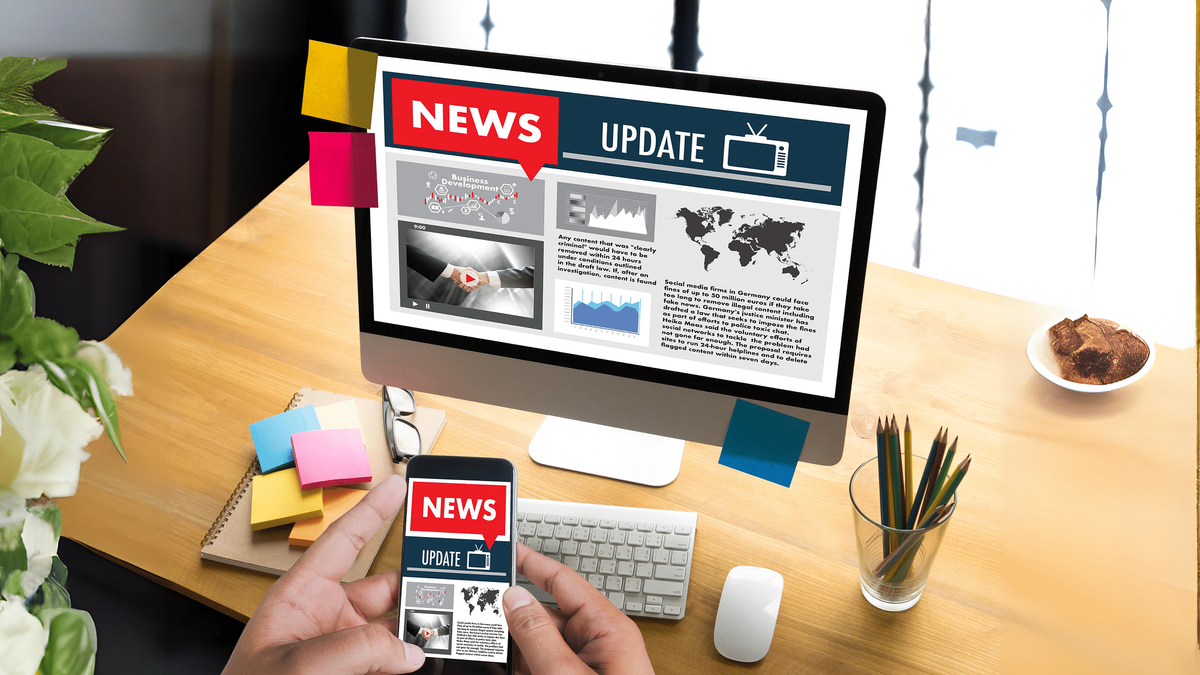
Digital journalism is moving beyond the traditional format of a headline followed by several paragraphs of text. Readers increasingly expect news experiences that allow them to explore information, understand context, and move between different parts of a story according to their interests. Interactive elements such as timelines, maps, data visualizations, videos, polls, expandable explanations, and live updates are becoming important parts of modern news publishing. This transformation reflects a broader change in how people consume information across smartphones, computers, and other connected devices.
The growing interest in interactive storytelling also creates new opportunities for digital news platforms. Instead of presenting multiple stories as isolated articles, publishers can organize related developments into a connected experience. A reader following a major event, for example, may want to see the latest update, review what happened earlier, examine relevant statistics, and understand how different developments are connected. This is where platforms such as newsgiga com can represent the wider shift toward flexible, multimedia-oriented news consumption.
Interactive journalism is not simply about adding more visual features to a webpage. Its real purpose is to make complicated information easier to explore without sacrificing accuracy or clarity. When interactive design is used thoughtfully, readers can spend more time understanding a subject instead of simply scanning headlines. The result can be a richer relationship between audiences and digital news.
How Interactive News Is Changing Digital Journalism
Traditional online articles remain important, particularly when readers need detailed explanations and reliable background information. However, modern audiences often encounter news through social feeds, mobile notifications, short videos, search results, and rapidly changing live coverage. Interactive formats respond to this environment by allowing information to be presented in different layers. A short summary can introduce an event, while additional interactive elements provide deeper context for readers who want it.
A major advantage of interactive storytelling is its ability to support different reading behaviors. Someone checking a developing story during a short break may only want the latest facts. Another reader researching the same subject may want historical context, statistics, expert explanations, and related developments. A well-designed interactive news experience can accommodate both audiences without forcing everyone through exactly the same path.
This approach is especially useful when a story contains multiple developments. Instead of publishing disconnected updates that make readers search through numerous pages, publishers can build a central experience where related stories are organized logically. This makes navigation easier and gives audiences a clearer understanding of how individual events fit into a larger narrative.
Why Multiple Stories Benefit From Interactive Formats
Some news subjects naturally involve many connected stories. Elections, sporting competitions, technology launches, natural disasters, business developments, and international events can produce dozens of updates within a short period. A conventional chronological article may become difficult to follow as new information is added. Interactive formats provide publishers with more ways to organize these developments.
For example, a technology story could combine the initial announcement, product specifications, industry reactions, market information, and subsequent updates. Rather than treating each item as completely separate, an interactive presentation can connect them through tabs, timelines, visual cards, or related-story sections. Readers can choose the part that interests them while still seeing the broader context.
The same principle applies to breaking news. When facts develop over several hours or days, a live timeline can help readers distinguish earlier events from recent developments. Interactive maps can show locations, while charts can illustrate changing figures. These features make a complicated story more understandable without requiring every reader to process a large block of text.
From Headlines to Story Journeys
The concept of a “story journey” is becoming increasingly relevant to digital publishing. Instead of treating a news article as a single destination, publishers can design an experience that guides readers through several connected questions: What happened? Why does it matter? What changed? What are the important numbers? What happened previously? What could readers watch next?
This structure can be particularly effective for platforms covering multiple stories. A reader may arrive through one headline and then discover related developments through contextual links within the page design. The objective is not simply to increase page views but to help readers understand relationships between events.
newsgiga com fits into this broader discussion because the phrase is associated with a digital-news style of content discovery where multiple stories and changing topics can be presented in an accessible format. The important trend is the movement toward news environments where readers can explore information rather than passively consume a single article.
The Role of Visual Storytelling
Visual communication has become one of the strongest components of interactive journalism. A complicated collection of numbers can be difficult to understand when presented only through prose, but a carefully designed chart can reveal patterns quickly. Similarly, a map can communicate geographical information more effectively than several paragraphs describing locations.

Images, videos, illustrations, diagrams, and animated elements can also provide context. However, visual content needs to serve a journalistic purpose. Adding movement simply because technology makes it possible can distract readers rather than help them. The most useful interactive elements are those that clarify information, reveal relationships, or give audiences control over what they want to explore.
| Interactive Format | Useful For | Reader Benefit |
|---|---|---|
| Timeline | Developing events | Shows sequence and context |
| Data visualization | Statistics and trends | Makes numbers easier to interpret |
| Interactive map | Location-based stories | Provides geographical context |
| Video | Interviews and demonstrations | Adds visual and human perspective |
| Polls or responses | Audience participation | Encourages direct engagement |
As digital publishers continue experimenting with these formats, the challenge is maintaining a balance between visual appeal and editorial substance. An attractive interface may bring attention to a story, but useful information is what keeps the experience meaningful.
Mobile-First News Experiences
The smartphone has changed the physical environment in which people read news. Readers may be using one hand, moving between applications, dealing with smaller screens, or accessing information through inconsistent network connections. Interactive news therefore needs to be designed around mobile usability rather than simply adapting desktop pages to smaller displays.
Responsive layouts, fast-loading media, readable typography, and intuitive scrolling can make a significant difference. Interactive charts should remain understandable on narrow screens, while videos and animations should not interfere with reading. If an interactive feature consumes too much bandwidth or takes too long to load, readers may leave before reaching the actual story.
Mobile-first design also encourages publishers to prioritize information. The most important facts should appear clearly before more advanced interactive elements. This ensures that readers can understand the central message even if they do not interact with every feature on the page.
How Audience Participation Is Becoming More Important
Interactive journalism can also change the relationship between publishers and audiences. Traditional news consumption generally moves in one direction: journalists publish and readers consume. Digital platforms can create additional opportunities for audiences to respond, explore, vote, submit questions, or compare information.
Polls are one simple example, although they need to be presented responsibly. A poll can show audience sentiment on a topic, but it should not automatically be treated as representative of the broader population. Similarly, comment sections and user responses can add perspectives while requiring appropriate moderation.
More sophisticated formats can allow readers to personalize what they see. A financial story might let users select a particular market or date range. A sports story could allow readers to examine statistics for individual teams. A travel story might let readers explore locations on an interactive map. These experiences give audiences a greater sense of control over the information.
newsgiga com can be viewed within this larger trend toward news discovery that combines content, navigation, multimedia, and reader engagement. As expectations evolve, digital publishers are likely to continue testing ways to make stories more participatory without compromising editorial standards.
Personalization and Smarter Content Discovery
Another important development is the increasing use of personalization in digital media. News platforms can organize stories according to subjects, reading patterns, location, or user-selected interests. When used transparently, personalization can help audiences find relevant information in an environment containing an enormous volume of daily content.
However, personalization also creates challenges. If readers only encounter material that matches their previous interests, they may miss important developments outside those preferences. Good news discovery systems therefore need to combine relevance with diversity and clear editorial organization.
Interactive formats can help address this problem by presenting several related perspectives within the same experience. Instead of recommending only one additional story, a publisher can show background information, alternative aspects of the subject, historical context, and related developments. This gives readers more opportunities to build a broader understanding.
Trust, Accuracy, and Responsible Interactivity
The growing use of interactive media does not reduce the importance of traditional journalistic principles. Accuracy, sourcing, transparency, corrections, and clear distinctions between fact and commentary remain essential. In fact, interactive stories can require additional care because information may be displayed through charts, animations, maps, or dynamic elements.
Readers should be able to understand where important figures come from and what a visualization represents. Labels, dates, definitions, and explanations can prevent misleading interpretations. When information changes over time, publishers should make clear whether a figure is preliminary, estimated, or updated.
This is particularly important for multiple-story formats. Combining numerous developments on one page can create confusion if updates are not clearly separated. Strong editorial design should make chronology, attribution, and context easy to identify.
What the Future May Look Like
The next phase of interactive journalism is likely to combine several technologies rather than depend on one format. Data visualization may appear alongside video, interactive timelines, personalized feeds, and AI-assisted summaries. The goal will increasingly be to help readers navigate complex information efficiently.
Artificial intelligence may also influence how stories are organized and summarized, but editorial oversight will remain important. Automated systems can help identify related developments or organize large quantities of information, while journalists remain responsible for verification, context, and presentation.
For publishers, the future will involve experimentation as well as restraint. Not every story needs an interactive map or animated graphic. A straightforward article may be the most appropriate format for a simple announcement, while a complicated developing story may benefit from a richer experience. Choosing the right format for the information is more important than using technology for its own sake.
newsgiga com reflects the broader conversation around evolving digital news formats, where audiences increasingly expect content to be accessible, visually engaging, and easy to explore. As publishers compete for attention, the quality of the experience will depend on whether interactive features genuinely improve understanding.
Key Features Shaping Interactive News
Several characteristics are becoming especially valuable as publishers develop modern news experiences:
- Responsive designs that work smoothly across smartphones, tablets, and desktops.
- Interactive charts, maps, and timelines that provide context beyond ordinary text.
- Multimedia combinations that bring together articles, images, audio, and video.
- Clear navigation that helps readers move between related stories and background information.
These features work best when they support a clear editorial purpose. Too many elements can make a page feel complicated, while carefully selected interactions can make even a complex subject easier to understand.
Conclusion
Interactive news formats are changing the way audiences discover, explore, and understand digital journalism. The shift goes beyond attractive graphics or animated webpages. It reflects a deeper movement toward flexible storytelling in which readers can examine timelines, explore data, watch supporting media, navigate connected stories, and choose how deeply they want to investigate a subject. For publishers covering multiple stories, interactive design offers an effective way to connect developments without overwhelming audiences. When supported by accurate information, thoughtful editorial organization, mobile-friendly design, and transparent presentation, these formats can make digital journalism more useful and engaging. The continued development of platforms such as newsgiga com illustrates the broader evolution of online news toward experiences that combine information with exploration.