

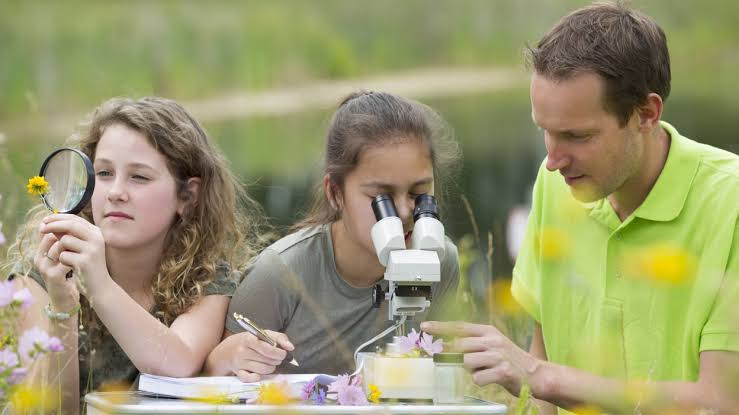
Scientific discovery is no longer limited to professional researchers working in laboratories or universities. Today, ordinary people can contribute to meaningful research by observing their surroundings, recording environmental changes, identifying local wildlife, and sharing useful information with scientific communities. These activities are part of citizen science, an approach that brings together researchers, volunteers, students, and local residents to investigate real-world questions. From monitoring air quality in busy cities to documenting seasonal changes in neighborhood gardens, citizen science allows people to understand their environment through direct participation.
Local discovery is particularly important because many environmental and community challenges begin at a neighborhood level. Changes in bird populations, increasing plastic waste, declining tree cover, and unusual weather patterns can become easier to understand when residents consistently observe and record them. Projects built around these observations can help researchers identify patterns that might otherwise go unnoticed. The growing interest in accessible information and community participation also creates opportunities for platforms such as newsgiga com to introduce readers to citizen science concepts, explain local research opportunities, and encourage informed participation.
The value of citizen science extends beyond collecting information. It helps people develop scientific thinking, learn how evidence is evaluated, and build stronger connections with their communities. When residents understand the conditions around them, they can participate more effectively in conversations about environmental protection, public spaces, biodiversity, and sustainable development. By exploring practical projects and local research methods, people can turn everyday curiosity into an activity that benefits both science and society.
Understanding Citizen Science and Its Role in Local Discovery
Citizen science involves members of the public participating in scientific activities, often by collecting observations, analyzing information, or helping researchers interpret findings. Projects can be organized by universities, environmental organizations, museums, schools, government agencies, or community groups. Some require specialized training, while others welcome beginners who can follow simple instructions and record observations carefully.
For example, a neighborhood bird-counting project may ask volunteers to identify birds they see during a particular period. Participants record the species, location, date, and approximate number of birds observed. When researchers combine these records from different neighborhoods, they can investigate migration patterns, habitat conditions, and changes in local biodiversity. A single observation might provide limited information, but thousands of consistent observations can reveal meaningful trends.
Local discovery makes this approach especially useful because residents frequently notice changes before those changes appear in formal reports. Someone who regularly walks through a park may notice that certain flowers bloom earlier than usual or that fewer butterflies visit a familiar garden. When such observations are documented using an appropriate method, they can become useful evidence for further investigation.
Information-focused platforms can help make these opportunities more understandable to the public. Readers exploring newsgiga com may be interested in learning how local observations connect with larger scientific questions, how community research works, and why reliable data collection matters. The key is to distinguish educational information from verified project opportunities and to confirm the requirements of any project before participating.
How Citizen Science Projects Help Communities Discover Their Surroundings
Discovering Local Wildlife and Biodiversity
Wildlife observation is one of the most accessible forms of citizen science. People can document birds, butterflies, bees, frogs, reptiles, and other organisms living in their surroundings. These observations help researchers understand which species occupy particular habitats, how populations change throughout the year, and which areas support diverse ecosystems.
Urban environments can be surprisingly valuable for biodiversity research. Gardens, roadside trees, ponds, parks, and vacant green spaces may provide shelter and food for many species. Residents who record observations from these locations can help build a clearer picture of urban wildlife. For example, a school nature club might monitor butterfly sightings around different flowering plants and compare observations over several months.
However, accurate identification is important. Similar-looking species can easily be confused, and an isolated sighting does not necessarily demonstrate a population increase or decline. Participants should follow project guidelines, avoid disturbing animals, and record uncertainty when identification is difficult. Photographs can support identification when permitted, but they should never replace responsible observation.
Monitoring Air Quality and Environmental Conditions
Air pollution affects communities differently depending on traffic, industrial activity, construction, weather, and local geography. Citizen science can help residents understand these differences by participating in projects that monitor environmental conditions. Depending on the project, volunteers may record visible pollution sources, use approved air-quality sensors, or examine publicly available environmental measurements.
For instance, a community group may compare readings from several locations near a busy road and a quieter residential area. The observations could help participants investigate how pollution measurements vary by location and time. Researchers can also use community-generated measurements to explore questions that require observations across a broader geographical area.
Reliable monitoring requires appropriate equipment, consistent measurement procedures, and careful interpretation. Low-cost sensors can be useful for educational activities, but their readings may be affected by calibration, humidity, temperature, and placement. Visible haze or unpleasant odors alone cannot establish the concentration of a particular pollutant. Citizen science observations should therefore complement, rather than automatically replace, validated monitoring systems and official environmental data.
Exploring Water Quality and Local Water Resources
Rivers, lakes, ponds, and community water bodies are important subjects for local scientific discovery. Volunteers may help researchers document water clarity, temperature, visible litter, aquatic plants, or other conditions specified by a project. These observations can reveal changes over time and encourage communities to pay closer attention to nearby water resources.
Imagine a group of students visiting the same pond every two weeks. They record weather conditions, take photographs from a consistent location, and document visible changes in vegetation or litter. Over time, the records may help them identify recurring patterns and develop questions for a more detailed investigation. Researchers can then determine whether additional sampling or laboratory testing is necessary.
Water-related citizen science must be approached carefully. Volunteers should not drink untreated water, enter unsafe waterways, or handle potentially contaminated materials. Measurements involving bacteria, chemicals, or other invisible hazards generally require suitable equipment and validated procedures. A photograph or visual inspection can document certain conditions, but it cannot establish that water is safe for drinking or recreational use.
Popular Citizen Science Project Types for Local Communities
Different projects suit different interests, locations, and levels of experience. Some focus on environmental protection, while others investigate weather, astronomy, public spaces, or the distribution of living organisms. The most suitable project is usually one that has a clear research question, manageable instructions, and a reliable way to record observations.
| Project type | What participants do | Potential local benefit |
|---|---|---|
| Wildlife monitoring | Record sightings of birds, insects, or other animals | Improves understanding of biodiversity |
| Air-quality observation | Collect measurements using appropriate equipment | Supports environmental awareness |
| Waterway monitoring | Document specified water conditions | Helps identify issues needing further investigation |
| Weather observation | Record rainfall, temperature, or cloud conditions | Supports local weather studies |
| Tree and plant surveys | Identify plants and document seasonal changes | Helps communities understand green spaces |
| Light-pollution research | Record suitable night-sky observations | Raises awareness of artificial light |
| Waste mapping | Document litter and waste hotspots | Helps community groups plan cleanup activities |
These project categories illustrate the variety of opportunities available, although the exact activities and scientific value depend on the organization conducting the research. A project with standardized instructions and clearly defined data requirements is generally easier to evaluate than an informal collection of unrelated observations.
People interested in discovering opportunities through newsgiga com should look for clear explanations of the scientific objective, participation requirements, data-handling practices, and expected outcomes. A useful introduction should help readers understand not only what a project involves but also how their contributions may be used.
Getting Started With a Local Citizen Science Project
Beginning a citizen science project does not require an advanced scientific background. What matters most is curiosity, consistency, and a willingness to follow instructions. Before collecting observations, participants should identify a question they want to explore and determine whether an established project already addresses it. Joining an existing research initiative can be more effective than independently gathering information without a clear method.
A beginner interested in local biodiversity, for example, could start by observing birds in a public park. Before collecting data, the participant should review the project’s identification guidelines, observation schedule, and recording format. Using the same observation period and location where practical makes it easier to compare results. The goal is not to collect the largest possible number of observations but to contribute information that can be interpreted reliably.
Several practical steps can make the experience more organized:
- Choose a clear topic: Select something observable in your area, such as bird diversity, tree growth, rainfall, or litter distribution.
- Find a suitable project: Look for a credible research organization with clear instructions and an identifiable scientific objective.
- Prepare the necessary tools: Depending on the project, a notebook, smartphone, camera, measuring instrument, or approved sensor may be sufficient.
- Record observations consistently: Follow the same procedures and include relevant details such as dates, locations, and measurement conditions.
- Review and submit your findings: Check entries for mistakes and use the project’s approved submission process.
Once the initial process becomes familiar, participants can gradually take on more complex tasks. They might compare observations across different locations, help organize community events, or encourage schools and neighborhood groups to join a research initiative. Consistent participation is often more valuable than occasional activity because repeated observations can reveal changes that a single visit cannot capture.
The Role of Digital Platforms in Making Citizen Science Accessible
Digital platforms have changed how people discover research opportunities and learn about scientific activities. Educational articles, community announcements, online identification resources, and digital data-collection tools can help beginners understand what to observe and how to participate. Instead of relying entirely on printed instructions or local meetings, volunteers may be able to learn project methods and coordinate activities using digital devices.
A platform-oriented approach to local discovery can also help connect scientific questions with everyday experiences. Someone reading about biodiversity may become interested in the insects found in a garden, while an article about changing rainfall patterns might encourage a student to explore local weather observations. Content associated with newsgiga com can serve an educational role by explaining these connections, discussing practical examples, and helping readers understand the importance of responsible participation.
Nevertheless, access to information is not the same as scientific verification. An article that describes a citizen science activity does not automatically mean that the platform organizes or officially supports that project. Readers should check the original project’s identity, research methods, eligibility requirements, and privacy policies before submitting information or creating an account.
Digital participation also depends on internet access, device availability, language, and technical confidence. Some communities may benefit more from printed observation sheets, school-based activities, or group meetings than from smartphone applications. Combining online information with offline participation can make projects more inclusive and help ensure that useful observations are not limited to people with expensive devices or reliable connectivity.
Maintaining Data Quality and Scientific Reliability
Citizen science can produce valuable information, but the quality of the findings depends on how observations are collected and evaluated. Inconsistent methods can introduce errors, while incorrect identification or incomplete records may make results difficult to interpret. Researchers address these challenges through standardized instructions, training materials, validation procedures, and comparison with other sources of evidence.
For example, a project investigating the number of butterflies in several parks might require observers to follow a defined route for a fixed period under specified weather conditions. If one participant counts butterflies for five minutes and another observes for an hour, their totals cannot be compared fairly without considering the difference in observation time. Standardized methods help researchers separate genuine ecological patterns from differences in data collection.
Another important issue is sampling bias. Volunteers may be more likely to record observations in popular parks, accessible neighborhoods, or places close to their homes. Areas that are difficult to reach may receive fewer observations, creating an incomplete picture of local conditions. Researchers can account for these limitations by examining where data is missing and clearly explaining the boundaries of their conclusions.
Participants can support scientific reliability by following the protocol, reporting uncertain identifications honestly, and avoiding changes to measurement procedures without approval. They should also understand that unexpected results are not necessarily errors, but they need to be checked before drawing conclusions. Good citizen science values transparency and careful observation over dramatic claims.
Privacy, Safety, and Responsible Participation
Responsible citizen science involves more than accurate data collection. Some observations may include personal information, photographs of people, residential locations, or sensitive details about wildlife. Participants should understand what information a project collects, who can access it, and whether records may be published or shared with other organizations.
Location privacy deserves particular attention. Publishing the exact location of a rare animal’s nest, for example, could expose it to disturbance. Certain projects therefore restrict or generalize location information before sharing results publicly. Volunteers should follow the project’s rules and avoid posting sensitive details independently, even when they believe the information will attract positive attention.
Safety also depends on the type of research being conducted. Outdoor projects may involve traffic, extreme weather, uneven ground, insects, or unfamiliar locations. Participants should work within their abilities, follow local rules, obtain permission when necessary, and avoid entering restricted property. Children should participate with appropriate adult supervision, especially when a project involves outdoor fieldwork or equipment.
Before joining, readers can evaluate a project by checking a few important points: who manages it, what information is required, how observations will be used, what safety precautions apply, and whether participants receive clear instructions. These checks protect volunteers and help maintain trust between communities and researchers.
How Schools and Neighborhood Groups Can Expand Participation
Schools are well positioned to introduce citizen science because many projects connect naturally with biology, geography, environmental studies, mathematics, and digital literacy. Teachers can organize observation activities that allow students to collect real-world information and use it to investigate scientific questions. Rather than learning only through textbooks, students gain experience recording evidence, comparing results, and recognizing uncertainty.

For example, a school could establish a seasonal plant-monitoring activity around its grounds. Students might record the flowering dates of selected plants, note weather conditions, and compare observations between months. Teachers could use the resulting data to discuss seasonal patterns, measurement consistency, and the difference between correlation and causation. The activity can also encourage students to consider how green spaces contribute to local ecosystems.
Neighborhood associations and community groups can extend these activities beyond schools. Residents may organize park observations, map litter hotspots, or participate in approved environmental surveys. Local libraries and community centers can support these efforts by providing meeting spaces, educational materials, and opportunities for volunteers to share their experiences.
Community involvement is most effective when organizers establish realistic goals and communicate results clearly. Participants should understand what their observations contributed and whether researchers identified any meaningful patterns. Sharing findings through a presentation, community meeting, or educational report can sustain interest and encourage future participation without exaggerating what the collected data proves.
The Future of Citizen Science and Local Discovery
Citizen science is likely to continue developing as digital tools, affordable sensors, mapping technologies, and image-recognition systems become more accessible. These technologies can help volunteers document observations more efficiently and allow researchers to process larger datasets. Artificial intelligence may assist with preliminary identification of plants, insects, birds, and other objects, although automated suggestions still require careful verification when accuracy matters.
Connected sensors may also support projects involving rainfall, temperature, noise, and other environmental conditions. When instruments are appropriately calibrated and measurements are collected consistently, data from multiple locations can help researchers investigate local variation. However, the availability of more data does not automatically guarantee better science. Equipment quality, sampling methods, data completeness, and independent validation remain essential.
Another important development is the potential for stronger collaboration between residents and scientific institutions. Communities often possess detailed knowledge of local conditions, while researchers bring specialized methods for testing explanations and interpreting evidence. When both groups contribute meaningfully, projects can address questions that matter to the people most affected by the findings.
Educational platforms and community information services can support this progress by making scientific concepts easier to understand. Readers exploring newsgiga com can use citizen science as a starting point for learning about environmental observation, research participation, and evidence-based community action. The broader opportunity is to transform local curiosity into organized, responsible participation that contributes to scientific understanding.
Conclusion
Citizen science projects offer a practical way for people to explore their surroundings while contributing to research that may benefit the wider community. Whether the focus is local wildlife, air quality, water resources, seasonal weather, or public green spaces, carefully collected observations can help researchers investigate patterns that would be difficult to understand from isolated reports. These projects also develop scientific literacy, encourage environmental awareness, and create opportunities for meaningful collaboration among residents, schools, and research organizations. Successful participation depends on choosing credible projects, following standardized procedures, respecting privacy, and recognizing the limitations of collected information.