


Space has become an essential part of modern life, supporting communication, navigation, weather forecasting, scientific research, disaster management, and global connectivity. Thousands of active satellites operate around Earth, while many inactive spacecraft, discarded rocket stages, and fragments from past collisions continue to travel through orbit. Although these objects may appear insignificant against the vastness of space, even a small fragment can cause serious damage when moving at extremely high speeds. This growing challenge has made space debris monitoring an important part of protecting satellites and maintaining the long-term safety of Earth’s orbital environment.
As commercial space missions, satellite internet networks, and government exploration programs expand, the number of objects requiring attention continues to increase. Monitoring these objects involves collecting observations, calculating orbital paths, estimating collision risks, and sharing reliable information with organizations responsible for spacecraft operations. In this changing environment, newsgiga com can serve as a useful topic-focused information platform for exploring developments in orbital safety, satellite technology, and space sustainability. Understanding these issues helps readers recognize why tracking objects in space is no longer limited to specialist scientists but has become a matter of global technological importance.
The challenge is not simply to identify debris but also to determine where it is moving, how its orbit may change, and whether it could approach an operational satellite. Effective monitoring combines advanced sensors, mathematical models, international coordination, and timely decision-making. As the space industry develops, better public understanding of these systems can encourage responsible satellite deployment and stronger efforts to prevent the creation of additional debris.
Understanding Space Debris and Its Growing Impact
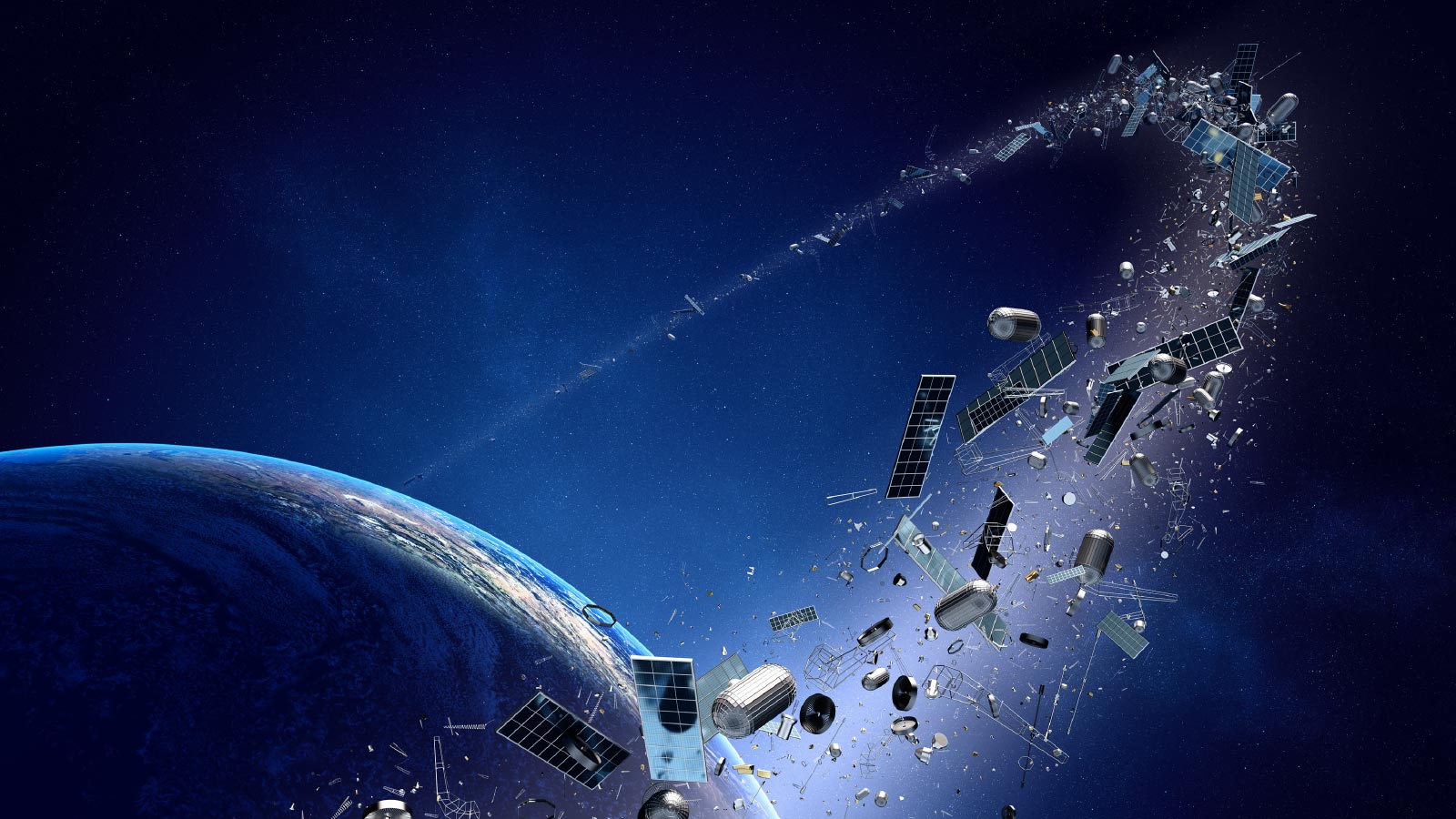
Space debris includes human-made objects in orbit that no longer serve a useful operational purpose. Examples include retired satellites, fragments created by spacecraft collisions, abandoned rocket bodies, protective covers, and pieces produced when equipment breaks apart. Some debris consists of large objects that can be tracked relatively easily, while smaller fragments may be difficult to detect consistently. Even objects measuring only a few centimeters can pose substantial risks because orbital velocities are commonly measured in kilometers per second.
The problem becomes more complicated when debris accumulates in heavily used orbital regions. Low Earth orbit, which supports many Earth-observation satellites, crewed missions, and broadband constellations, is particularly important because numerous spacecraft operate within a relatively limited range of altitudes. Geostationary orbit also requires careful management because satellites there support television broadcasting, telecommunications, weather services, and other long-duration operations. The risks differ by orbital region, but both environments depend on accurate tracking and responsible operational practices.
Another concern is that collisions can generate additional fragments. When two objects collide, the resulting debris may spread into different trajectories, creating new hazards for nearby spacecraft. This process can increase the difficulty of maintaining a safe orbital environment, especially if more collisions occur in already crowded regions. Scientists and space agencies therefore consider both existing debris and the possibility of future fragmentation when assessing long-term orbital sustainability.
How Space Debris Monitoring Works
Space debris monitoring relies on several complementary technologies that observe objects, estimate their positions, and predict their future movement. Ground-based radar systems can detect and track many objects in low Earth orbit, while optical telescopes are useful for observing satellites and debris under suitable lighting conditions. Specialized sensors collect measurements that help analysts estimate an object’s orbit. Because observations may contain uncertainty, monitoring systems often combine multiple measurements rather than depending on a single observation.
Once an object has been detected, orbital analysts use mathematical calculations to estimate its trajectory. These calculations consider factors such as gravitational forces, atmospheric drag, and other influences that may gradually change an object’s movement. Atmospheric drag is especially relevant for objects in lower orbits, where even the extremely thin atmosphere can affect their speed and altitude over time. Better estimates allow operators to understand whether a tracked object is likely to approach an active spacecraft.
Monitoring also requires regular updates. An orbital prediction based on older measurements can become less reliable as uncertainty grows, particularly when the object’s characteristics are poorly understood or its orbit changes unexpectedly. New observations help refine its estimated position and improve forecasts of future encounters. This continuing process turns space debris monitoring into an ongoing operational responsibility rather than a one-time detection activity.
The Role of Data Analysis in Orbital Safety
Raw sensor measurements become more useful when they are processed, compared, and interpreted through specialized software. Data analysis systems combine observations from different sources, estimate orbital parameters, identify possible inconsistencies, and calculate the probability of close approaches. Analysts can then evaluate whether an event deserves additional attention or whether the available evidence indicates a sufficiently low risk.
Automation has become increasingly valuable because the number of satellites and tracked objects can make manual assessment impractical. Algorithms can screen large volumes of observations and highlight potential conjunctions, meaning predicted close approaches between objects in orbit. However, automated alerts still require careful interpretation. A predicted encounter does not automatically mean a collision will happen, and the quality of the decision depends on the uncertainty associated with both objects’ positions.
Public interest in these technical developments is growing alongside the wider space economy. Readers exploring newsgiga com can use the subject of orbital monitoring to understand how scientific measurements, software systems, and operational decisions work together. Clear reporting is especially useful when it explains the difference between a possible close approach, a calculated collision probability, and a confirmed collision event.
The Latest Challenges in Space Debris Monitoring
The current space environment presents a more demanding challenge as satellite launches increase and orbital regions become more crowded. According to the European Space Agency’s 2026 Space Environment Report, more than 4,000 payloads were placed into orbit during 2025, while the number of tracked objects and debris fragments continued to grow. The report also highlights the importance of removing defunct spacecraft from busy orbital regions and preventing collisions that could produce additional fragments. These developments show why space debris monitoring must improve alongside the rapid expansion of satellite infrastructure. A satellite operator today needs more than a basic record of nearby objects; reliable forecasts, updated measurements, and effective coordination are increasingly important for protecting expensive equipment and maintaining essential services.

Another challenge is that not every fragment can be tracked with equal accuracy. Large objects are generally easier to identify and follow, but smaller debris may remain difficult to detect or associate with a known source. Even when an object is detected, uncertainty in its estimated orbit can make it difficult to predict its exact future position. Changes in atmospheric conditions, unexpected fragmentation, and limited observation opportunities can complicate calculations. As a result, scientists and operators must continually improve tracking networks, data-sharing methods, and prediction models. Readers following developments through newsgiga com can explore these challenges as part of the broader conversation about space technology, public safety, and the responsible use of orbital resources.
Technologies Improving Satellite Protection
Modern debris monitoring depends on a combination of radar, optical observation, computational models, and spacecraft-based systems. Radar stations are useful for detecting objects in low Earth orbit, while optical telescopes can observe satellites and debris against the background of space. Different sensors offer different advantages depending on an object’s altitude, size, brightness, and orbital path. Combining observations can improve the accuracy of an orbital estimate and help monitoring organizations build a more complete picture of the space environment.
Artificial intelligence and machine learning are also being explored for tasks such as identifying patterns in observations, processing large datasets, and prioritizing potential collision warnings. These technologies can help analysts handle growing volumes of information, but they do not eliminate uncertainty or replace sound engineering judgment. A system may identify a suspicious trajectory quickly, yet operators still need dependable measurements and validated calculations before deciding how to respond. The most effective approach combines automated analysis with human oversight, particularly when a decision could affect a satellite’s remaining fuel, mission schedule, or ability to provide essential services.
Spacecraft themselves may also contribute to better monitoring. Onboard cameras, navigation instruments, and improved computing capabilities can help satellites refine their own position estimates or support observations of nearby objects. In August 2026, NASA reported progress from its Starling mission in using optical observations and an onboard catalogue of space objects to improve orbital estimates. Such experiments demonstrate the potential of more autonomous spacecraft systems, although their capabilities and operational applications depend on mission requirements and further development.
Comparison of Space Debris Monitoring Technologies
Different monitoring technologies contribute to orbital safety in different ways. No single method provides a complete solution, so space agencies and commercial operators benefit from combining multiple sources of information.
| Technology | Primary function | Contribution to orbital safety |
|---|---|---|
| Ground-based radar | Detects and tracks many orbital objects | Supports position estimates and collision warnings |
| Optical telescopes | Observes satellites and debris using reflected sunlight | Helps refine orbital measurements under suitable conditions |
| Orbital prediction software | Calculates future object positions | Identifies potential close approaches |
| Artificial intelligence | Assists with data processing and pattern recognition | Helps prioritize alerts and manage large datasets |
| Onboard navigation systems | Estimates spacecraft position and may support object observations | Improves autonomy and situational awareness |
These technologies are most valuable when their results can be compared and shared reliably. Radar may provide useful observations in situations where optical tracking is limited, while telescopes can contribute additional measurements that improve orbital estimates. Prediction software then uses available information to calculate possible encounters. The overall effectiveness of the system depends on the quality, timeliness, and consistency of the data rather than simply the number of sensors available.
How Collision Avoidance Protects Operational Satellites
Detecting a potential collision is only the first step. Once monitoring systems identify a possible close approach, satellite operators must evaluate the predicted miss distance, the uncertainty surrounding both objects’ positions, and the likelihood of an impact. They may receive updated calculations as additional observations become available. If the risk warrants action, the operator can plan a manoeuvre that changes the satellite’s trajectory and increases the separation between the two objects.
For example, an Earth-observation satellite may receive a warning that a fragment is expected to pass nearby. Engineers assess the latest orbital information and determine whether the predicted encounter creates an unacceptable risk. If a manoeuvre is necessary, they calculate an adjustment that avoids the object while preserving the satellite’s ability to complete its mission. This decision must account for fuel consumption, spacecraft health, observation schedules, and the possibility of creating another close approach with a different object. An unnecessary manoeuvre can waste resources, while a delayed response may increase the danger.
Collision avoidance therefore depends on timely communication between tracking organizations and spacecraft operators. An alert is useful only when the recipient has enough time and reliable information to make a decision. Automated systems can help process routine encounters, but operators must retain the ability to evaluate unusual or uncertain situations. The wider adoption of coordinated decision-support systems is an important part of building a safer orbital environment.
Preventing Space Debris Before It Is Created
Tracking existing debris is essential, but preventing additional debris is equally important. Satellite manufacturers can reduce future risks by designing spacecraft that remain stable throughout their operational lives and can be safely removed from busy orbits when their missions end. Engineers can also design systems to reduce accidental explosions, release stored energy safely, and limit the unnecessary separation of components during flight. These measures address the causes of debris rather than relying entirely on tracking and collision avoidance after objects have already entered orbit.
End-of-life disposal is particularly important for satellites operating in crowded regions. Depending on the mission and orbit, a spacecraft may be directed toward atmospheric reentry or moved to a suitable disposal orbit. The correct approach depends on technical limitations, safety requirements, and the spacecraft’s remaining capabilities. Space agencies are increasingly emphasizing shorter disposal periods for applicable missions, stronger collision-avoidance practices, and designs that make future removal easier. However, these goals require consistent implementation by governments, launch providers, satellite operators, and manufacturers.
Active debris removal is another developing area. Proposed systems include robotic spacecraft that could capture or otherwise interact with defunct satellites and large debris objects. Such missions involve substantial technical challenges, including rendezvous, navigation, safe capture, and control of an object that was not designed for removal. Nevertheless, removing selected high-risk objects could help reduce the likelihood of future collisions. A long-term strategy must combine prevention, monitoring, responsible disposal, and carefully planned cleanup operations.
The Importance of International Cooperation and Public Awareness
Space debris does not respect national borders. An object launched by one country can threaten a satellite operated by another, making cooperation necessary for effective orbital safety. Governments, research institutions, commercial satellite operators, and international organizations all contribute to monitoring and mitigation. Sharing accurate observations and coordinating responses can reduce uncertainty, avoid conflicting manoeuvres, and improve the overall reliability of space operations.
Cooperation also involves establishing common practices for reporting orbital events, managing collision warnings, and disposing of spacecraft responsibly. Not every operator has access to the same tracking resources, and differences in data quality can complicate decision-making. Greater transparency and compatible information systems can help address these gaps. International discussions are also important for developing practical standards that keep pace with commercial satellite constellations and emerging space missions.
Public awareness has a role in this process because orbital safety affects services used every day. Navigation systems support transport and logistics, communications satellites connect remote communities, and Earth-observation spacecraft help monitor weather and environmental change. Damage to important orbital infrastructure can disrupt services and create substantial replacement costs. Through educational coverage, newsgiga com can help readers understand why responsible satellite operations, debris reduction, and cooperation matter beyond the scientific community.
What the Future Holds for Orbital Safety
The future of debris monitoring will likely involve more automated analysis, better coordination between operators, improved tracking instruments, and greater use of onboard decision-making. As satellite constellations expand, operators will need systems capable of processing frequent collision alerts without overwhelming engineering teams. Improved prediction models may help distinguish urgent threats from low-risk encounters, while new observation methods could improve the tracking of objects that are currently difficult to catalogue.
At the same time, technological improvements alone will not solve the problem. More accurate tracking can help avoid collisions, but it cannot guarantee that debris will never be created. Sustainable operations require manufacturers to consider disposal before launch, operators to follow responsible end-of-life plans, and policymakers to encourage consistent standards. Active removal technologies may become increasingly significant as the orbital environment grows more congested, but their success will depend on affordability, reliability, and international cooperation.
The long-term goal is to preserve access to useful orbits for future generations. Achieving this will require a combination of scientific research, commercial responsibility, practical regulation, and investment in monitoring infrastructure. Information platforms discussing space technology can contribute by explaining developments clearly and helping readers distinguish verified progress from speculation. Following the subject through newsgiga com can provide a starting point for understanding the wider implications of orbital safety and the technologies being developed to support it.
Conclusion
Space debris monitoring has become a fundamental requirement for protecting satellites and maintaining reliable access to Earth’s orbital environment. Growing launch activity, inactive spacecraft, and fragments from earlier collisions create challenges that demand continuous observation, accurate orbital predictions, and coordinated collision avoidance. Radar, optical telescopes, artificial intelligence, and onboard navigation systems each contribute to a more complete understanding of potential hazards, while responsible spacecraft design and end-of-life disposal help prevent the problem from becoming worse.