

.jpg "AI Chip Demand and Newsgiga Com Market Trends")
Artificial intelligence has moved from being a specialized technology trend to becoming one of the biggest forces shaping the global semiconductor industry. The rapid expansion of generative AI, AI agents, large language models, computer vision, autonomous systems, and enterprise automation is creating demand for increasingly powerful computing infrastructure. At the center of this transformation are AI chips, including graphics processing units (GPUs), application-specific integrated circuits (ASICs), AI accelerators, CPUs, networking processors, and high-bandwidth memory technologies. Current industry forecasts indicate that AI infrastructure is no longer simply an additional source of semiconductor demand; it has become one of the industry’s primary growth engines. Gartner expects global semiconductor revenue to exceed $1.3 trillion in 2026, with AI semiconductors representing approximately 30% of total semiconductor revenue.
This changing environment is also influencing technology and business coverage across digital publishing. Readers increasingly want to understand not only what new AI products are being released but also how chip demand, data-center investment, supply constraints, and semiconductor competition could affect the broader technology market. In that context, newsgiga com market coverage can provide a useful lens for following the relationship between AI innovation and the companies building the hardware behind it. The story is bigger than GPUs alone: memory, advanced packaging, networking, cooling, electricity infrastructure, and custom chips are all becoming increasingly important parts of the AI economy.
Why AI Chip Demand Is Growing So Quickly
The biggest reason behind the rise in AI chip demand is the growing computational intensity of modern AI systems. Training a large AI model requires enormous quantities of parallel processing, while inference—the process of generating answers or predictions after a model has been trained—is becoming an equally important source of demand as AI services reach consumers and businesses. Companies are deploying AI assistants, coding systems, search tools, recommendation engines, voice applications, autonomous systems, and enterprise automation platforms at a rapidly expanding scale.
The market is therefore moving beyond the idea that AI requires chips only during model training. Once an AI application gains millions of users, inference workloads can generate enormous and continuous demand for computing resources. This is encouraging cloud providers and technology companies to expand data centers while simultaneously looking for more efficient processors. TrendForce raised its forecast for AI server shipments in 2026 to nearly 31% year-over-year growth, while major cloud-service providers are expected to significantly increase capital expenditure on AI infrastructure.
The result is a broader semiconductor demand cycle. AI workloads require accelerators, but they also require memory, CPUs, networking chips, power-management components, storage, optical connectivity, and advanced packaging. This means the economic impact of AI extends throughout the semiconductor supply chain rather than benefiting only the most recognizable GPU manufacturers.
The Shift From GPUs to a Broader AI Chip Ecosystem
GPUs remain central to the AI computing market because their architecture is highly suited to parallel workloads. However, the industry is gradually becoming more diversified. Large technology companies are developing custom ASICs and other specialized processors designed for specific AI workloads. These chips can potentially provide better efficiency, lower operating costs, or improved performance for particular applications.
Google has developed its own TPU ecosystem, while other large cloud companies are also increasing their investment in custom silicon. TrendForce expects ASIC-based AI servers to represent around 27.8% of AI server shipments in 2026, showing how specialized processors are gaining importance alongside traditional GPU systems.
This development does not necessarily mean GPUs will disappear. Instead, the AI market is moving toward a mixed computing environment in which GPUs handle flexible and demanding workloads while custom accelerators target specific applications. As AI models become more specialized, companies may increasingly choose hardware according to performance per watt, cost per inference, memory capacity, software compatibility, and total ownership cost.
For technology-market observers, this is an important trend to follow. Newsgiga com discussions around AI hardware can increasingly extend beyond individual chip launches toward the competitive relationship between general-purpose accelerators and specialized AI processors.
Data Centers Are Becoming the Heart of AI Chip Demand
AI chip demand cannot be separated from the rapid expansion of data centers. Cloud providers are building new facilities and upgrading existing infrastructure to handle AI workloads that require far greater computing density than many traditional cloud applications. These investments involve not just servers but also electricity distribution, cooling systems, networking equipment, storage, and physical facilities.
The scale of investment is significant. TrendForce estimated that the combined capital expenditure of nine major cloud-service providers could exceed $886.7 billion in 2026, with AI infrastructure being a major driver of this spending. IDC, meanwhile, forecasts data-center semiconductor revenue of approximately $477.1 billion in 2026, illustrating how deeply AI infrastructure is influencing the wider chip industry.
This investment creates a multiplier effect. More data centers require more AI accelerators, but they also need high-speed networking, memory, storage, power-management chips, and advanced cooling. Consequently, companies that might not manufacture AI processors themselves can still benefit from the expansion of AI infrastructure.
The trend also creates new challenges. Data centers consume substantial amounts of electricity and generate significant heat. As AI racks become more powerful, liquid cooling and advanced power architectures are becoming increasingly important. The AI chip market is therefore increasingly connected to the energy and infrastructure industries.
HBM and Advanced Packaging Become Critical
One of the most important developments in the current AI chip market is the growing importance of high-bandwidth memory, commonly known as HBM. Advanced AI accelerators need extremely fast access to data, and HBM provides the bandwidth required for many high-performance AI workloads.
However, producing HBM is more complicated than manufacturing conventional memory. The industry has faced supply constraints because HBM production requires specialized processes and advanced packaging capabilities. Omdia reported that HBM, advanced packaging, and leading-edge manufacturing capacity are expected to remain important bottlenecks as AI demand continues to exceed available supply.
This creates an interesting situation for the semiconductor market. Even when demand for an AI accelerator is strong, manufacturers cannot simply increase production overnight. They must secure advanced manufacturing capacity, memory supplies, packaging resources, and specialized equipment.
The importance of memory is reflected in broader semiconductor forecasts as well. Gartner expects memory revenue to increase dramatically in 2026 because of AI-driven demand and price inflation. Therefore, discussions around newsgiga com market trends and AI hardware increasingly need to include memory technologies rather than focusing exclusively on processors.
Key AI Chip Market Trends to Watch
Several developments are likely to influence the AI semiconductor market throughout the remainder of the decade:
- Continued investment in AI data centers and high-performance computing infrastructure.
- Increasing competition between GPUs and custom AI accelerators.
- Strong demand for HBM and advanced semiconductor packaging.
- Greater attention to power efficiency, liquid cooling, and networking performance.
- Growing development of domestic AI-chip ecosystems in different regions.
These trends are interconnected. A faster AI processor is valuable only when the surrounding infrastructure can support it. Similarly, increasing accelerator performance creates additional demand for memory bandwidth, networking capacity, and power.
AI Chip Demand and Newsgiga Com Market Trends
The relationship between AI chip demand and newsgiga com market trends can be understood through the broader technology investment cycle. As AI becomes embedded into search, enterprise software, robotics, cybersecurity, healthcare technology, financial services, manufacturing, and consumer applications, hardware demand becomes closely connected with software adoption.
Investors and technology businesses are increasingly examining the entire AI infrastructure ecosystem instead of looking only at headline AI companies. Chip designers, foundries, memory manufacturers, networking companies, equipment suppliers, data-center operators, and cooling providers can all become part of the same investment story.
This makes semiconductor coverage particularly relevant to readers trying to understand where the AI economy is heading. Newsgiga com can approach this subject by connecting individual chip announcements with larger developments such as data-center expansion, supply-chain constraints, custom silicon, AI inference, and regional semiconductor strategies.
How AI Inference Is Changing the Chip Market
Training receives significant attention because it requires massive computational resources, but inference is becoming one of the most important long-term drivers of AI chip demand. Every time an AI assistant answers a question, an AI coding tool generates software, or an automated system analyzes information, computing resources are being consumed.
As AI applications become more widely adopted, companies are searching for processors optimized for fast and efficient inference. These processors may not always need the same characteristics as training-focused hardware. Low latency, energy efficiency, memory access, and cost per query can become critical considerations.
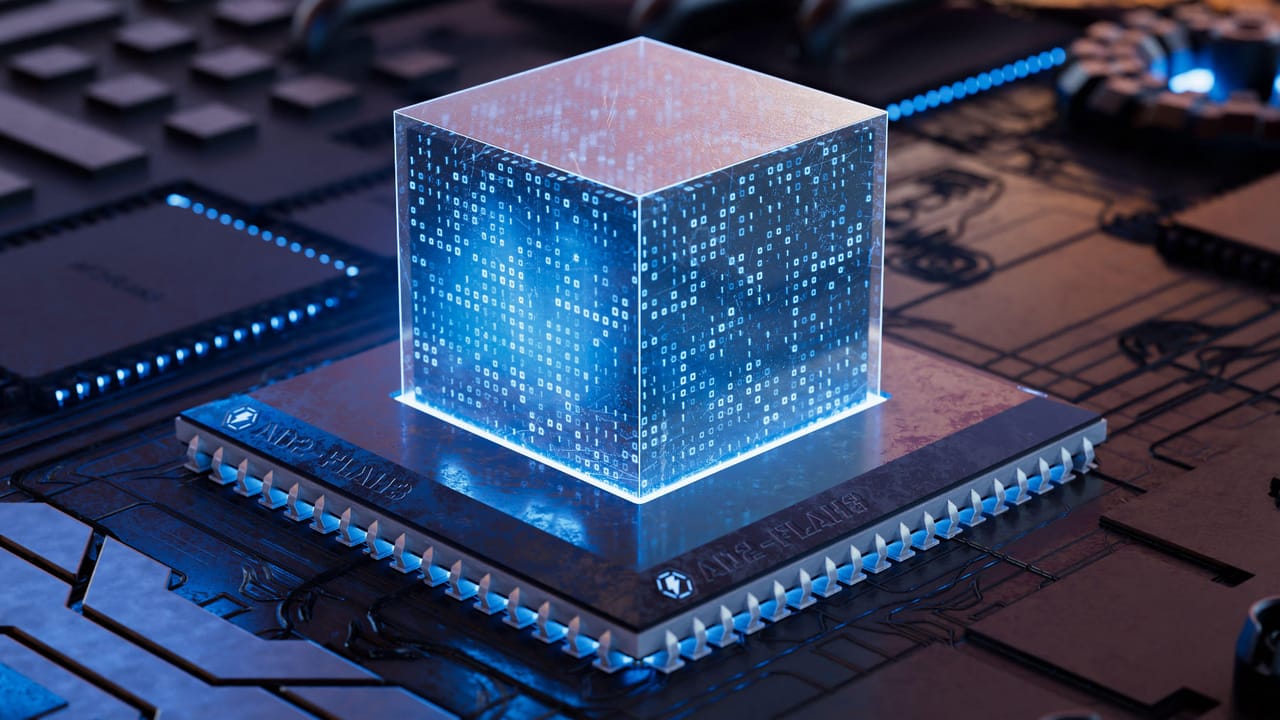
Recent developments illustrate this shift. Chip companies are working on specialized inference processors that can operate alongside existing GPU systems, creating more flexible AI infrastructure. This suggests that future data centers may combine multiple processor types rather than relying on a single architecture.
For readers following newsgiga com coverage, inference is therefore an important concept because it explains why AI chip demand could remain strong even after the initial wave of model-training investment matures.
Regional Competition Is Reshaping AI Semiconductors
AI chip development is also becoming an increasingly important part of national technology strategy. The United States, China, Taiwan, South Korea, Japan, Europe, and other regions are investing in semiconductor production, research, memory, advanced packaging, and AI infrastructure.
China is particularly focused on developing domestic alternatives amid restrictions affecting access to some advanced foreign AI hardware. Recent reports indicate that Chinese AI chip companies have raised prices as HBM shortages increase production costs, highlighting both the strength of local demand and the difficulty of building a complete domestic supply chain.
At the same time, foundries and memory manufacturers worldwide are expanding capacity to respond to AI-related demand. This competition could influence pricing, supply availability, technology development, and the geographic distribution of semiconductor manufacturing.
The long-term market may therefore become more regionalized, with governments and businesses seeking greater control over critical AI hardware supply chains.
AI Chips and the Importance of Energy Efficiency
Performance is no longer the only measure of a successful AI processor. Energy efficiency is becoming equally important because AI data centers require enormous quantities of electricity. As organizations deploy larger AI systems, the cost of powering and cooling hardware can become a major part of operational expenses.
This is encouraging chip designers to focus on performance per watt. A processor that delivers slightly lower peak performance but significantly better energy efficiency may be attractive for large-scale inference workloads. Similarly, data-center operators are investing in liquid cooling and new power-delivery architectures to handle increasingly dense AI systems.
The issue creates another layer of opportunity within the AI market. Semiconductor companies are not competing only to build faster processors; they are also competing to create systems that can operate economically at enormous scale.
One Table: Major AI Chip Market Drivers
| Market Driver | Why It Matters | Expected Impact |
|---|---|---|
| AI data centers | Expanding compute capacity | Higher accelerator demand |
| HBM memory | Provides high data bandwidth | Strong memory investment |
| Custom ASICs | Optimize specific workloads | More chip diversification |
| AI inference | Supports everyday AI services | Greater demand for efficient chips |
| Advanced packaging | Connects complex chip components | Critical manufacturing bottleneck |
| Power and cooling | Supports high-density computing | Growth in infrastructure spending |
What Could Limit AI Chip Market Growth?
Despite strong demand, the AI semiconductor market faces several risks. Supply shortages can increase costs and delay data-center deployments. Advanced packaging capacity can become a bottleneck even when processor manufacturing is available. Memory prices can also rise rapidly when demand outpaces production.
Another challenge is the enormous amount of capital required to build AI infrastructure. If companies invest too aggressively and AI applications fail to generate sufficient economic returns, future spending could slow. The industry therefore needs to balance technological ambition with practical business value.
There are also geopolitical risks. Export controls, trade restrictions, tariffs, and national semiconductor policies can affect the movement of advanced processors and manufacturing equipment. Companies operating globally may need to maintain different product strategies for different markets.
These factors do not necessarily eliminate the long-term opportunity, but they can create periods of volatility. Understanding these risks is essential when evaluating newsgiga com market discussions related to AI technology and semiconductor companies.
What the Next Phase of AI Chip Innovation May Look Like
The next stage of AI hardware development is likely to focus increasingly on complete computing systems rather than individual processors. AI servers will combine accelerators, CPUs, HBM, networking chips, storage, optical connections, cooling systems, and sophisticated software into tightly integrated platforms.
Chiplet architectures could become more important because they allow manufacturers to combine different computing components within a single package. Advanced packaging technologies may consequently become almost as strategically important as transistor improvements.
At the same time, specialized AI processors will continue to expand. Instead of one chip being expected to handle every workload, data centers may use different accelerators for training, inference, recommendation systems, scientific computing, and other specialized tasks.
This transition could make the AI semiconductor market more competitive and technically diverse. Newsgiga com readers following these developments can expect increasing attention on chip architecture, manufacturing capacity, memory technology, and infrastructure economics rather than simply processor specifications.
Conclusion
AI chip demand has become one of the defining forces of the semiconductor industry. The growth of generative AI, AI agents, enterprise automation, and large-scale inference is pushing technology companies to build increasingly powerful and efficient computing infrastructure. GPUs remain essential, but the market is becoming more diverse as custom ASICs, inference accelerators, HBM, advanced packaging, and specialized networking technologies gain importance.

.jpg&description=Explore AI chip demand, data-center investment, GPU and ASIC growth, HBM shortages, and how newsgiga com market trends reflect the evolving AI economy.)